Back to Work
Development

Mnjood

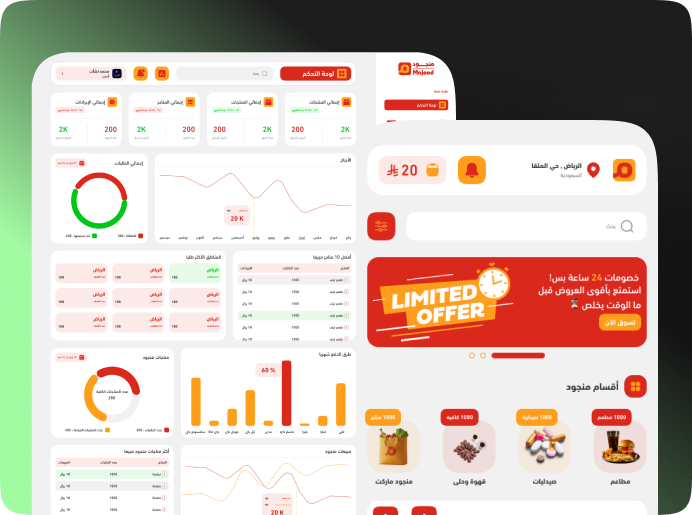
Mnjood is a Saudi Arabian food delivery and restaurant aggregation platform connecting diners with local eateries across the Kingdom. The project required building a scalable, real-time ordering system with full Arabic RTL support and seamless payment integration for the Saudi market.
Mnjood
The Challenge

Building a Competitive Delivery Ecosystem from Scratch

The Saudi food delivery market is fiercely competitive, with customers expecting sub-30-minute delivery times, real-time order tracking, and frictionless digital payments. Mnjood entered this space as a challenger brand with a mission to spotlight local, family-owned restaurants that were underserved by global aggregators. The platform needed to serve three distinct user groups—diners, restaurants, and delivery drivers—each with completely different needs and workflows. The legacy prototype was a basic web form that restaurants updated manually; there was no live inventory, no driver dispatch system, and no way to handle peak-hour traffic spikes. Payment options were limited, and the lack of Arabic-first UX alienated a significant portion of the target audience. The challenge was to design and build a full ecosystem—consumer app, restaurant dashboard, and driver app—that could compete on experience while remaining operationally lean.

No real-time inventory or order management for restaurant partners.

Manual driver dispatch causing 45+ minute average delivery times.

Limited payment options and no support for Apple Pay or STC Pay.

Lack of Arabic-first RTL design excluding the majority of local users.

UI/UX Design

RTL-Native Design for Three User Personas

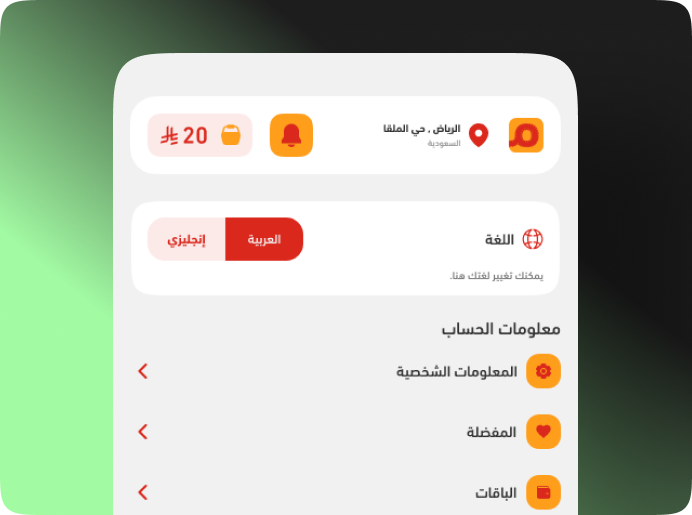
We approached the design Arabic-first, ensuring every component—from navigation to form validation—was natively right-to-left rather than mirrored after the fact. The diner interface used large, appetite-triggering food photography with one-tap reordering, smart category tabs, and a map-first restaurant discovery view. For restaurant partners, we designed a dedicated tablet-optimized dashboard with loud audio order alerts, one-tap acceptance, and prep-time timers that helped them manage kitchen throughput. The driver app prioritized safety and speed: oversized accept/reject buttons, voice-prompted navigation in Arabic, and an earnings tracker that updated in real time. We reduced the checkout flow to three taps by pre-filling addresses, defaulting to the last payment method, and surfacing promo codes contextually rather than hiding them behind a menu.

Arabic-first RTL interface designed natively, not mirrored from LTR.

Map-first restaurant discovery with smart category and dietary filters.

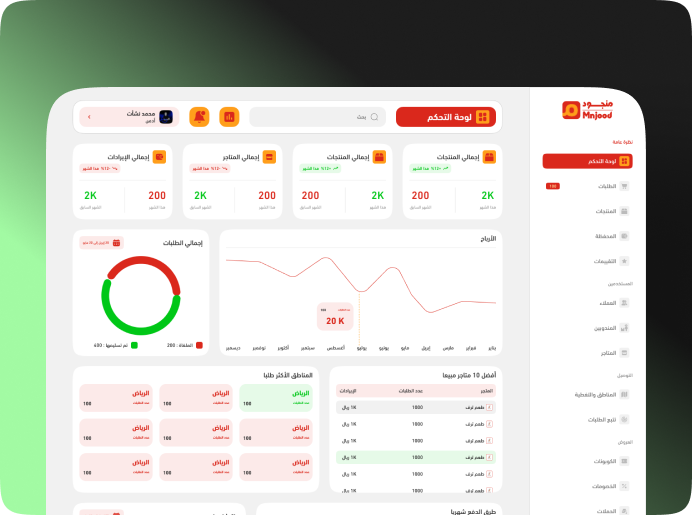
Tablet-optimized restaurant dashboard with audio alerts and prep timers.

Driver app with oversized controls, Arabic voice navigation, and real-time earnings.

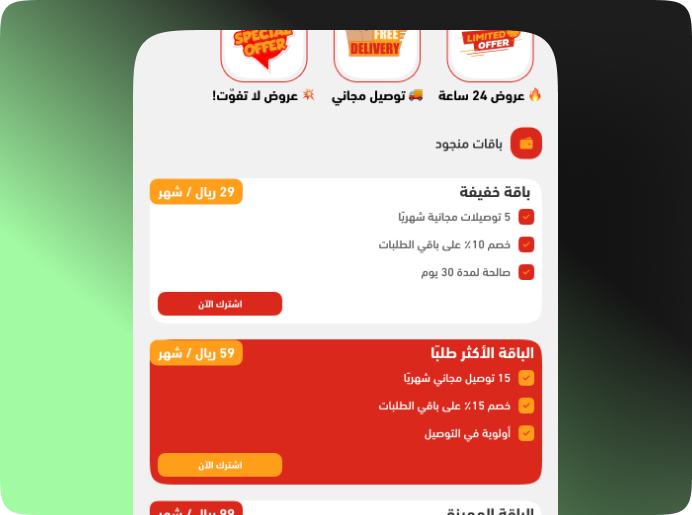
Three-tap checkout with pre-filled addresses and contextual promo codes.

Content Strategy

Localized Content and Menu Intelligence

Food content needs to make people hungry, but it also needs to be accurate. We built a menu ingestion system that let restaurants upload photos, descriptions, and modifiers through an intuitive CMS, with AI-assisted tagging for dietary preferences (halal, vegetarian, spicy). All content was written and reviewed in formal Arabic, with ingredient lists and allergen warnings displayed prominently. We created a content strategy around 'hidden gems'—editorial features on neighborhood restaurants that built an emotional connection with diners and differentiated Mnjood from algorithmic competitors. Rating prompts were timed to post-delivery rather than interrupting the meal, and review responses from restaurants were surfaced publicly to build community trust.

AI-assisted menu tagging for dietary filters and allergens.

'Hidden Gems' editorial features spotlighting local neighborhood eateries.

Ingredient lists and halall certifications displayed prominently.

Post-delivery review prompts timed to maximize response quality.

Public restaurant responses to reviews building community transparency.

Development

Real-Time Laravel and Flutter Stack

The consumer-facing platform was built as a responsive web app using Laravel 10 and Livewire, enabling real-time UI updates without heavy JavaScript frameworks. The restaurant dashboard and driver apps were built with Flutter, sharing a single codebase across iOS and Android while maintaining native performance. Real-time order status, driver location, and chat were powered by Firebase Cloud Messaging and a Laravel Echo server backed by Redis. We used PostgreSQL for transactional data and Elasticsearch for fast restaurant and menu search. Google Maps Platform handled geocoding, distance matrix calculations for delivery ETAs, and driver navigation. Payments were integrated with Hyperpay (supporting Mada, Visa, Mastercard, Apple Pay, and STC Pay), with webhook-based status synchronization and automatic refund handling.

Laravel Livewire Flutter Elasticsearch

Laravel 10 + Livewire responsive web app with real-time UI updates.

Flutter cross-platform apps for restaurant dashboard and driver fleet.

Firebase Cloud Messaging and Laravel Echo for real-time notifications.

Elasticsearch for sub-second restaurant and menu search.

Hyperpay integration with Mada, Apple Pay, and STC Pay support.

Security

Multi-Layered Security for Financial Transactions

Handling thousands of daily financial transactions in the Saudi market required bank-grade security. We implemented PCI DSS Level 1 compliance by offloading all card processing to Hyperpay's hosted fields, ensuring no sensitive payment data ever entered our infrastructure. All API communications were encrypted with TLS 1.3, and we enforced certificate pinning in the Flutter apps to prevent man-in-the-middle attacks. User authentication used Laravel Sanctum with short-lived JWT access tokens and rotating refresh tokens. Rate limiting was applied aggressively to login, checkout, and promo-code endpoints to prevent abuse. Driver identity was verified through a KYC workflow integrating with the Saudi National Address API, and all order modifications were logged immutably for dispute resolution.

PCI DSS compliance via Hyperpay hosted fields—no card data on servers.

TLS 1.3 for all API traffic with certificate pinning in mobile apps.

Laravel Sanctum with short-lived JWTs and rotating refresh tokens.

Rate limiting on auth, checkout, and promo endpoints to prevent abuse.

KYC driver verification via Saudi National Address API integration.

Results

Explosive Growth in Orders and Restaurant Partners

Mnjood scaled from a pilot in Riyadh to operations in Jeddah, Dammam, and Medina within six months. Daily order volume increased by 300%, and the average checkout time dropped to under 45 seconds. Restaurant partner onboarding time was reduced from two weeks to three days thanks to the self-service dashboard and automated menu ingestion. Customer retention hit 88% among users who completed three orders, driven by the loyalty program and personalized re-engagement push notifications. The platform maintained a 4.7-star App Store rating, with praise focused on speed, Arabic UX, and reliable delivery tracking. Operational efficiency improved dramatically: average delivery time fell from 45 minutes to 28 minutes through better dispatch algorithms.

+300%
Daily Orders
45s
Avg. Checkout Time
-22%
Cart Abandonment
+88%
Customer Retention
4.7★
App Store Rating
+250%
Restaurant Partners
Project Gallery

Explore the work in detail

Start Your Project

Want results like these for your business?

Mnjood saw +300% Daily Orders. Let's talk about what we can do for you.

+20 106 0547 671
hello@codestan.com

Outcome

Scaled to process thousands of daily orders across multiple Saudi cities within six months.

Services

UI/UX Mobile App Food & Beverage SaaS

Live Site

Visit Mnjood